Recognition & Accreditation

Graham Department of Education (GDE)
The Graham Department of Education (GDE) recognizes Graham International University. GDE is part of the FIRST ONLINE BLACK AMERICAN (FBA) EDUCATION SYSTEM, The Frankie Graham Jr. Foundation (FGJF), in accordance with United Nations Article 27 of the International Covenant on Civil and Political Rights (ICCPR).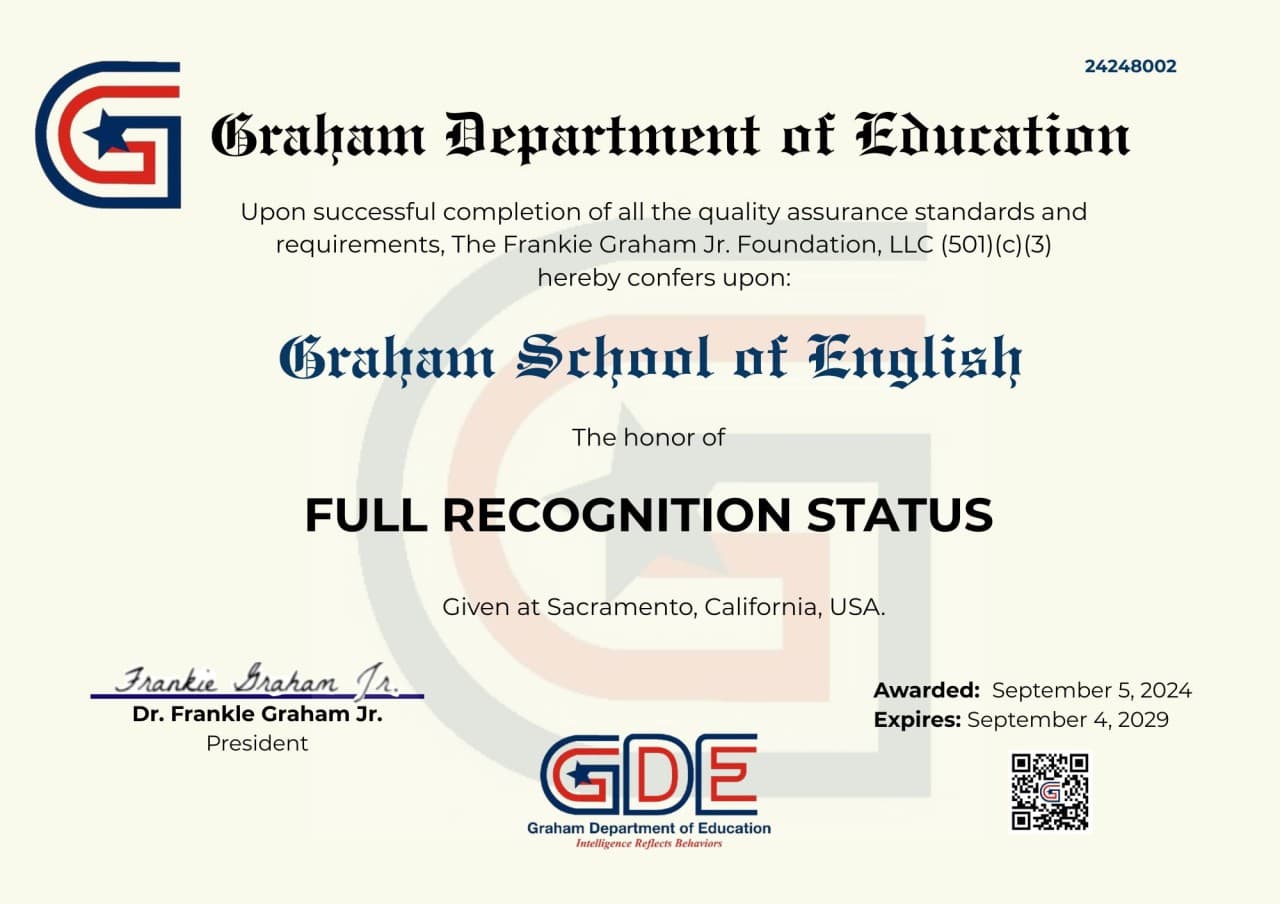
Verify Our GDE Recognition
Graham International Education Accreditation Agency (GIEAA)
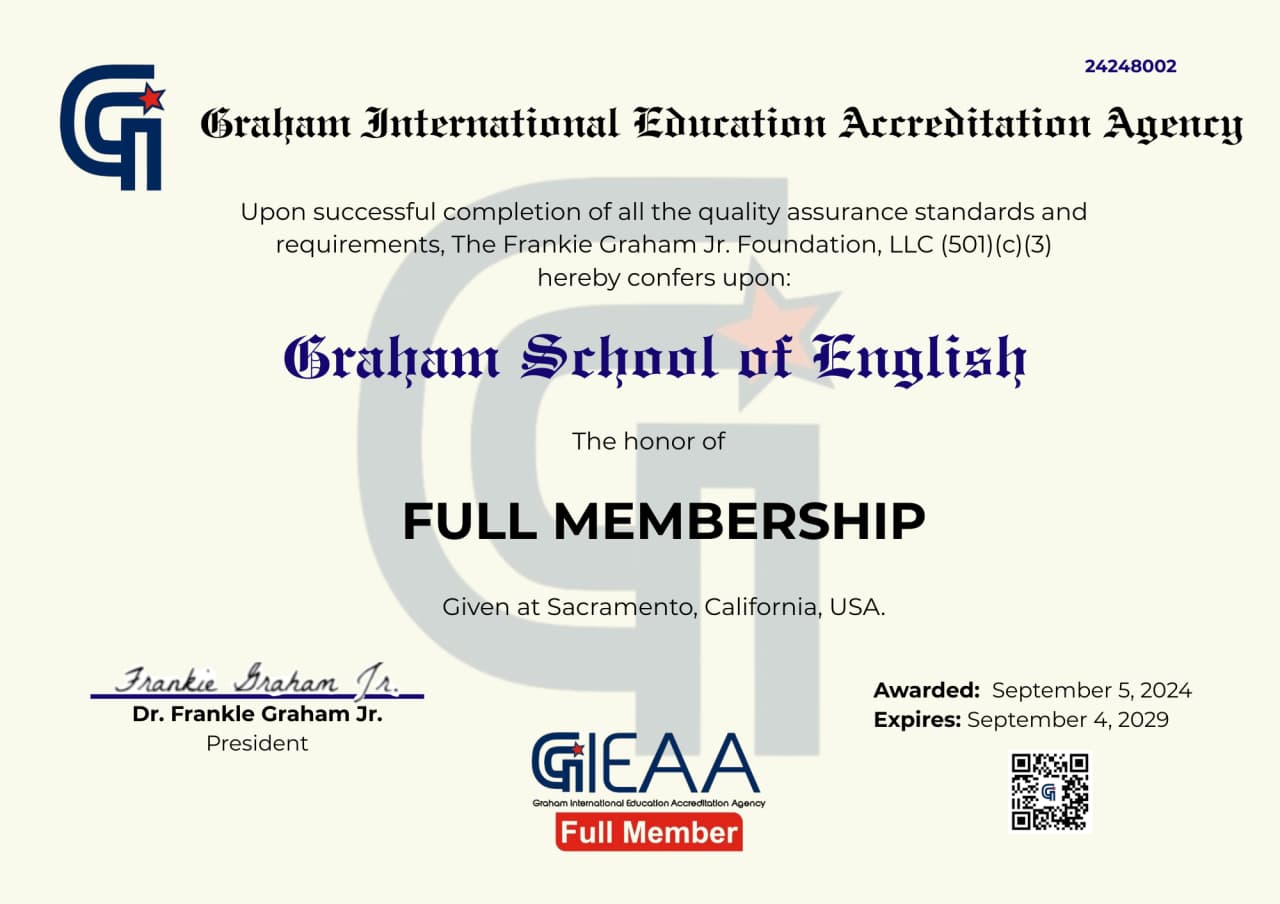
Graham School of English achieved Full Accreditation from the Graham International Education Accreditation Agency (GIEAA). This recognition affirms the school’s commitment to maintaining the highest educational standards and ensuring excellence in curriculum development, teaching methods, and student success. GIEAA’s rigorous evaluation process guarantees that GSE adheres to international best practices, positioning its programs and graduates for global recognition.
Verify our GIEAA Accreditation

California Association of Private Postsecondary Schools (CAPPS)
The California Association of Private Postsecondary Schools (CAPPS), founded in 1985, represents over 200 private institutions across California, including for-profit, non-profit, and religious schools. Based in Sacramento, CAPPS advocates for its members by engaging with state leaders, offering professional development, and providing legislative updates. Through initiatives like ICEPAC and various awards programs, CAPPS promotes the value of private education and supports students, institutions, and workforce retraining efforts.
Verify Our CAPPS Membership

U.S. Black Chambers, Inc. (USBC)
The U.S. Black Chambers, Inc. (USBC) serves as the national voice for Black business empowerment and economic advancement. Representing over 140 Black Chambers of Commerce and affiliated businesses nationwide, USBC provides advocacy, leadership, and resources to support the growth and sustainability of Black-owned enterprises. Its mission is rooted in promoting economic empowerment through entrepreneurship, access to capital, and business education. USBC champions policies and initiatives that create opportunities for Black businesses, fostering wealth creation and strengthening communities across the United States.

African-American Chamber of Commerce of PA, NJ, & DE
The African-American Chamber of Commerce of Pennsylvania, New Jersey, and Delaware is a non-profit organization committed to supporting the economic growth and development of African-American businesses in the tri-state area. Founded in 1993, it provides resources, advocacy, and networking opportunities to empower African-American entrepreneurs. The chamber works to ensure equitable access to business opportunities and foster collaboration among its members to enhance economic advancement within the community.
California Black Chamber of Commerce
The California Black Chamber of Commerce (CALBCC) is the largest African American non-profit business organization in California, dedicated to empowering Black-owned businesses and advocating for economic equity. CALBCC provides resources, networking opportunities, and policy support to foster business growth and sustainability. Through education, entrepreneurship development, and strategic partnerships, the chamber works to enhance economic opportunities for African American communities, ensuring long-term success and financial empowerment for Black business owners and professionals across the state.

California African American Chamber of Commerce
The California African American Chamber of Commerce (CAACC) is a leading organization dedicated to advancing the economic development and empowerment of African American businesses and communities across California. Through advocacy, networking, and business support, CAACC provides resources that promote entrepreneurship, workforce development, and educational opportunities. By fostering partnerships with corporations, policymakers, and educational institutions, CAACC works to create equitable economic growth and ensure African American businesses thrive in competitive markets.
GSE achieved the following ISO certifications from the American National Standards Institute (ANSI), an approved ISO certification body.

ISO/IEC 27001:2022: Information Security Management Systems (ISMS)
ISO/IEC 27001:2022 is the leading international standard for information security management systems (ISMS). It provides a framework for managing sensitive data, ensuring information security, and mitigating risks from potential breaches. Organizations that achieve ISO 27001 certification demonstrate their commitment to protecting data integrity, confidentiality, and availability. This standard is critical for institutions managing large volumes of sensitive information, including educational organizations handling student records and research data.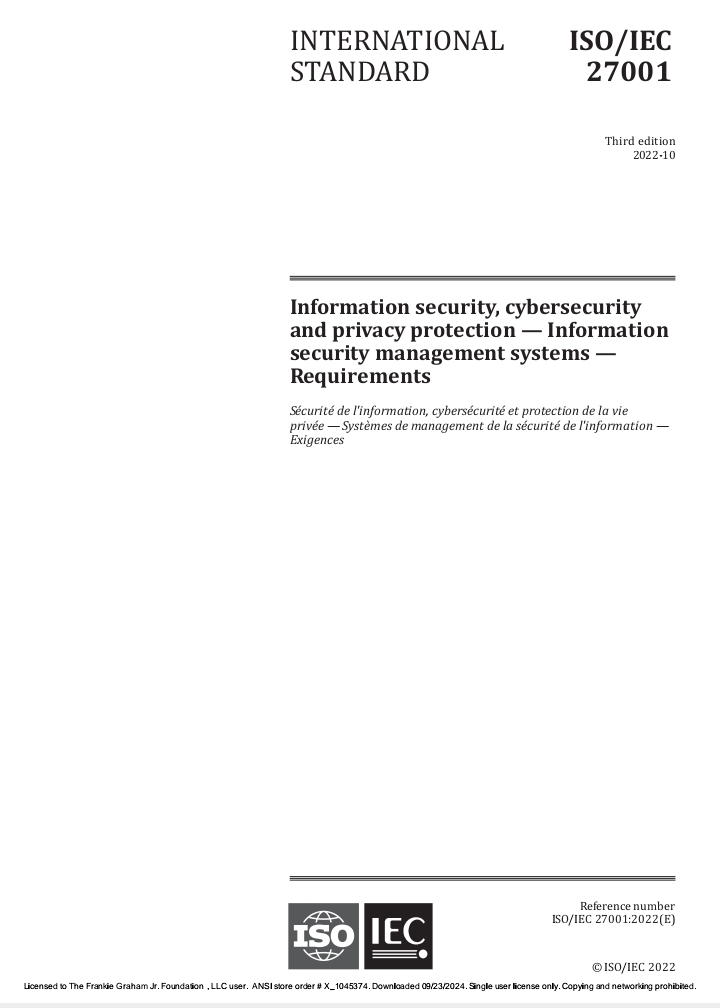
ISO 9001:2015: Quality Management Systems
ISO 9001:2015 is a globally recognized standard for quality management systems (QMS). It focuses on ensuring consistent product and service quality by improving organizational efficiency, customer satisfaction, and continual improvement. Accredited organizations demonstrate their commitment to meeting customer needs and regulatory requirements through well-structured processes and a strong focus on quality control. This certification is applicable to all sectors, making it a versatile standard for various industries.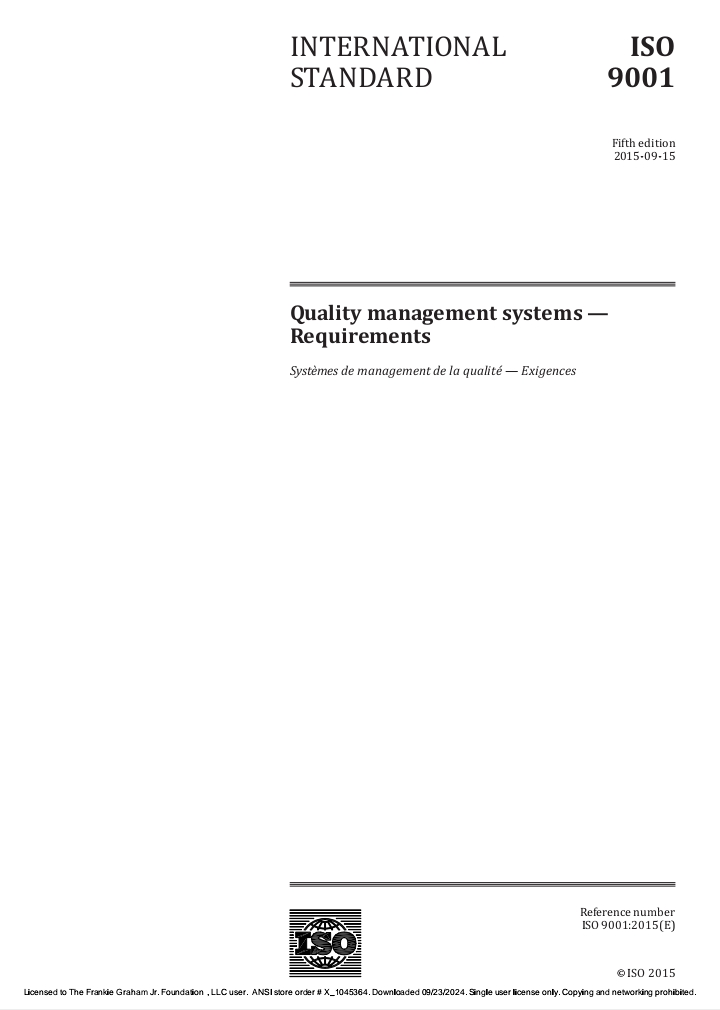
ISO 14001:2015: Environmental Management Systems
ISO 14001:2015 is an internationally recognized standard for environmental management systems (EMS). It provides organizations with a framework to manage their environmental responsibilities effectively, including reducing waste, conserving resources, and minimizing their ecological impact. By adopting ISO 14001, organizations demonstrate a proactive approach to environmental stewardship, aligning with sustainability goals and regulatory compliance. This certification is particularly valuable for institutions looking to improve their environmental footprint.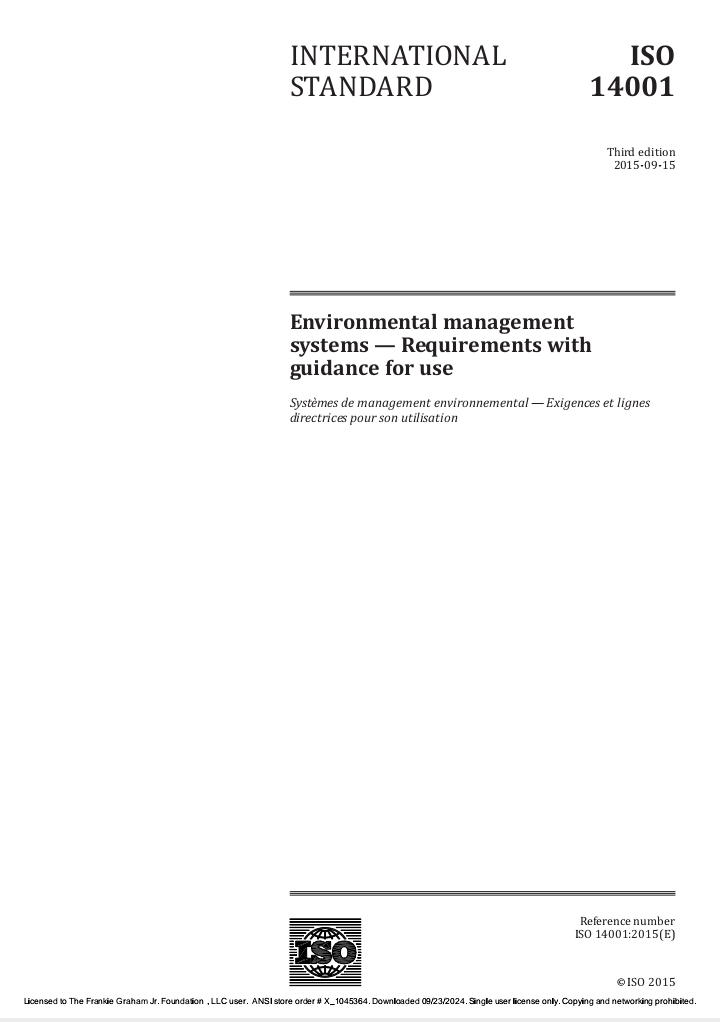
ISO 21001:2018: Educational Organizations Management Systems (EOMS)
ISO 21001:2018 provides a management system framework tailored specifically for educational institutions. This standard ensures that educational organizations meet the needs of learners and other stakeholders by improving the quality of education, fostering personalized learning, and increasing institutional efficiency. ISO 21001 enhances the credibility of educational institutions, promotes accountability, and aligns teaching methodologies with global best practices.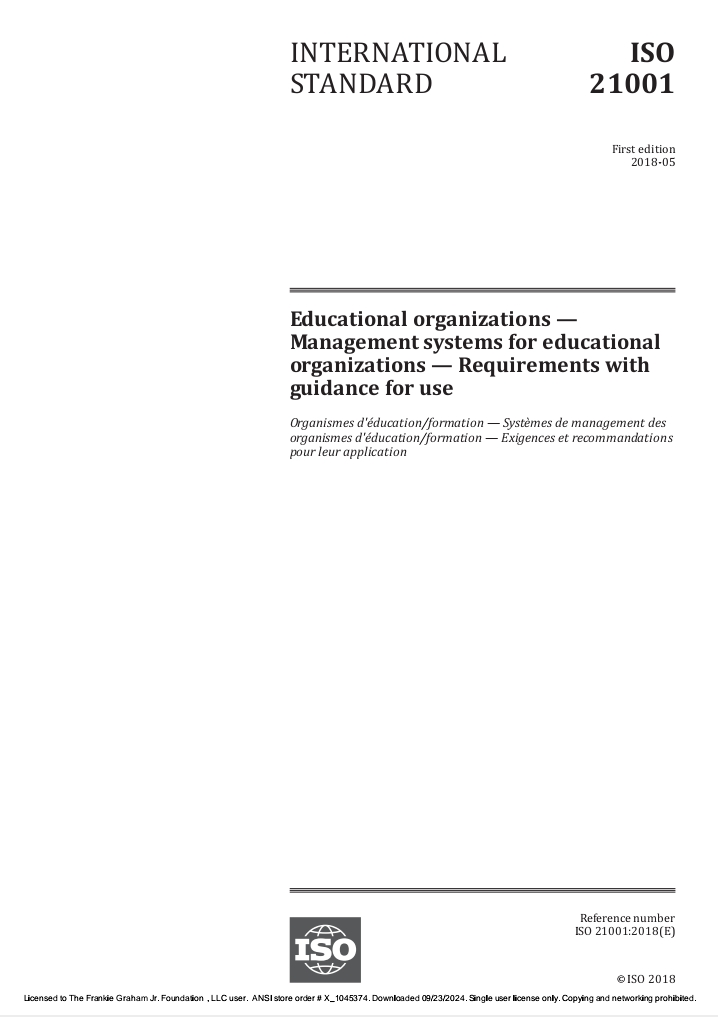
ISO 29993:2017: Learning Services Outside Formal Education
ISO 29993:2017 sets a standard for organizations offering learning services outside formal educational frameworks, such as training centers and vocational institutions. It ensures the consistent quality of learning services, focusing on learning needs, service design, delivery, and evaluation. Organizations with this certification demonstrate their commitment to delivering effective, learner-centered educational experiences. ISO 29993 also helps enhance transparency and accountability in non-formal education. 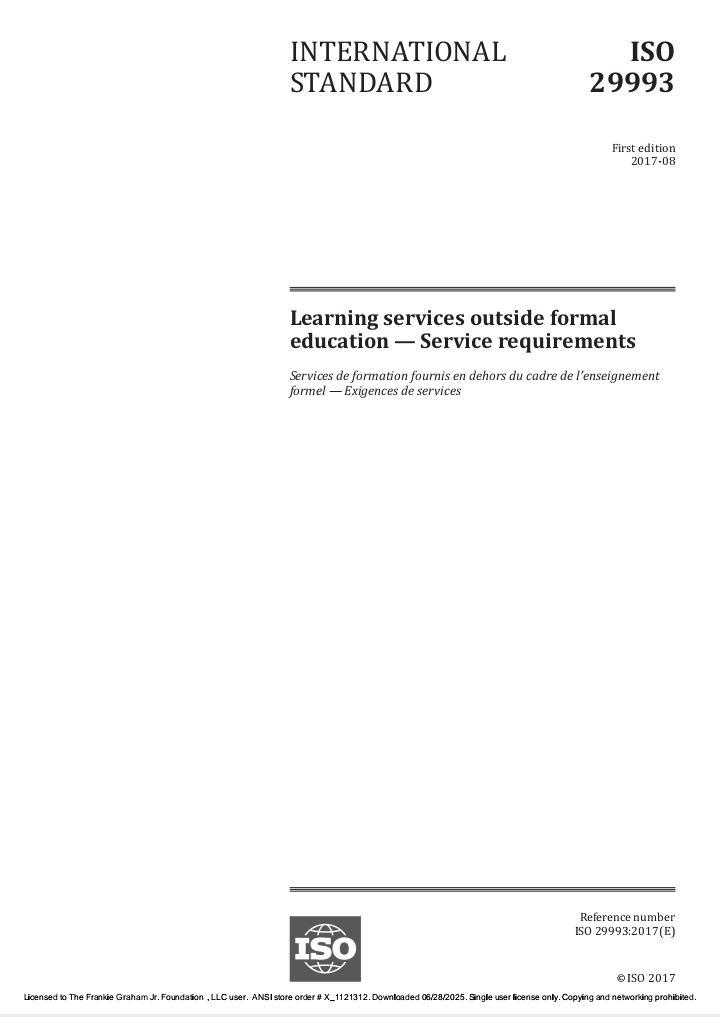
ISO 29995:2021: Education and Learning Services – Vocabulary
ISO 29995:2021 specifies the terminology used in education and learning services to ensure clarity and consistency across various learning contexts. This standard establishes a shared vocabulary that facilitates communication between educational institutions, training providers, and learners globally. It covers terms related to teaching methodologies, curriculum development, assessment procedures, and learning outcomes. By using a common set of definitions, ISO 29995:2021 enhances understanding and alignment across educational services, ensuring quality and transparency in the delivery of learning experiences. This certification demonstrates GIU’s commitment to clear communication and the professional delivery of educational services, making it easier to develop, assess, and improve learning solutions.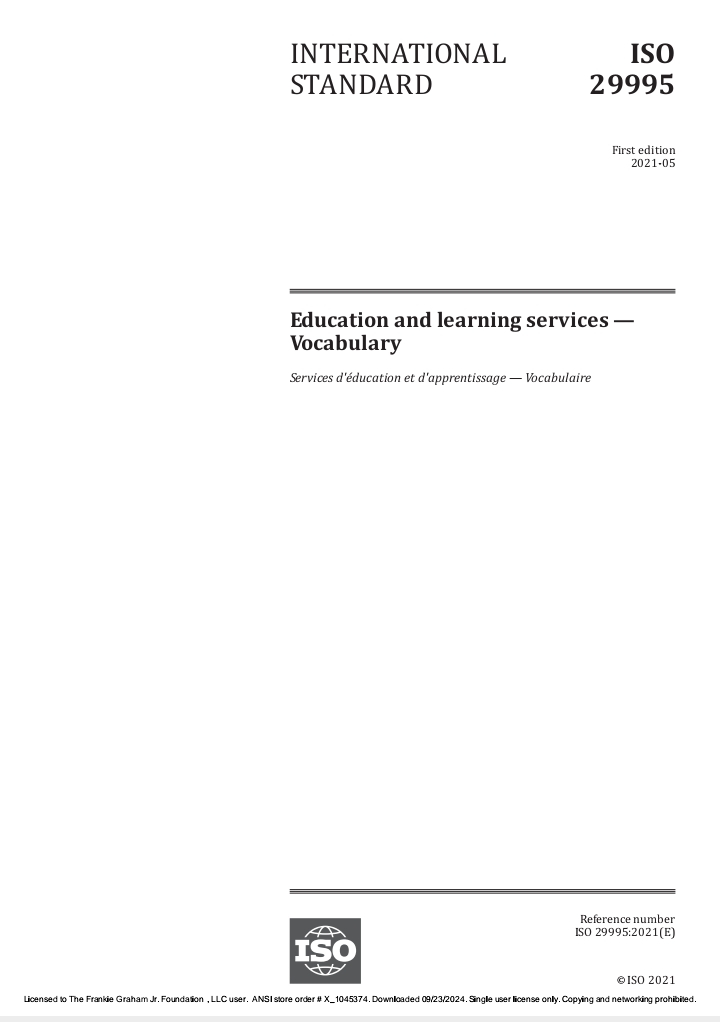
ISO 29990:2010: Learning Services for Non-Formal Education and Training—Basic Requirements for Service Providers
ISO 29990:2010 establishes a quality management system for learning service providers offering non-formal education and training. It focuses on improving the quality of the learning process and ensuring consistent delivery by outlining requirements related to learning needs analysis, design, delivery, assessment, and evaluation. The standard emphasizes learner-centered approaches, instructor competence, and continuous improvement. It applies to organizations providing training services outside traditional academic systems, helping them build credibility, increase transparency, and ensure the effectiveness of their programs. Adopting ISO 29990 helps align services with international quality expectations.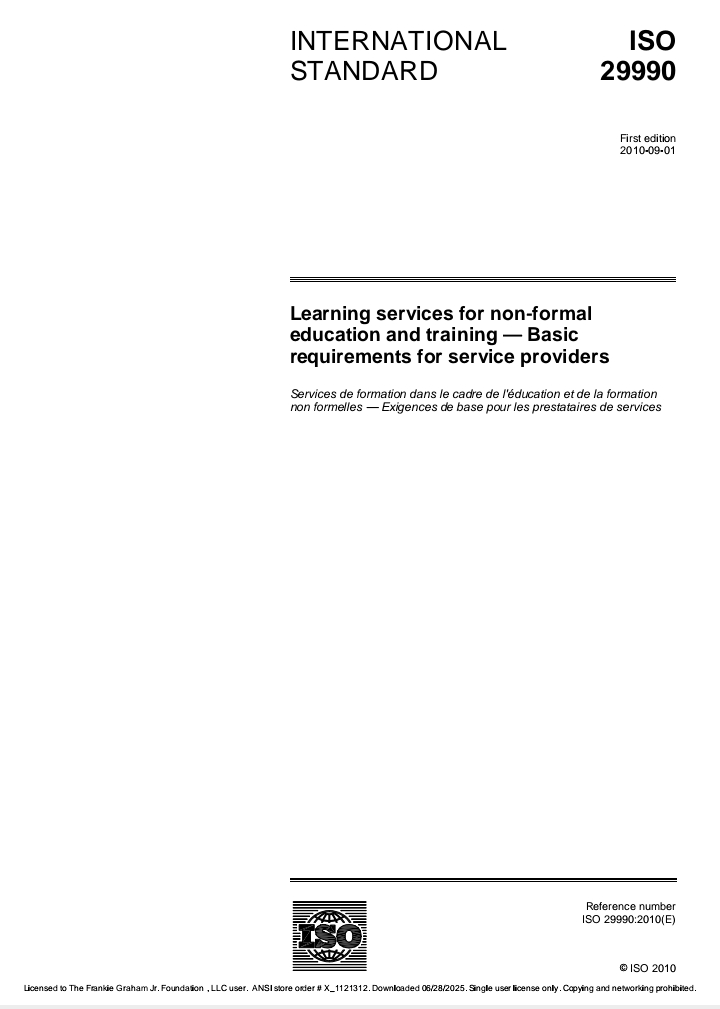
ISO/IEC 40180:2017: Information Technology—Quality for Learning, Education and Training—Fundamentals and Reference Framework
ISO/IEC 40180:2017 provides a foundational framework for ensuring quality in technology-supported learning, education, and training. It defines key concepts, principles, and criteria essential for evaluating e-learning systems and services. The standard includes guidelines on system design, content development, delivery methods, learner engagement, and quality assurance mechanisms. It supports educational organizations and training providers in creating effective, accessible, and consistent digital learning environments. ISO/IEC 40180 is particularly valuable for ensuring interoperability and alignment between different learning platforms while promoting innovation and continuous improvement in technology-enhanced education.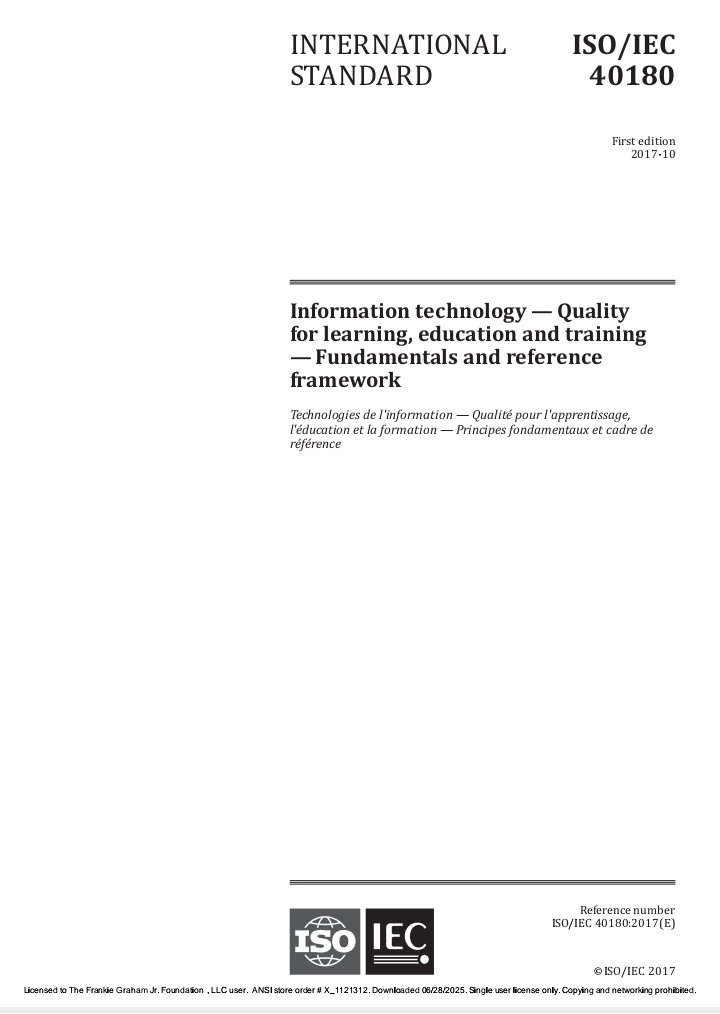
ISO 29994:2021: Education and Learning Services—Requirements for Distance Learning
ISO 29994:2021 outlines quality requirements specific to distance learning services, aiming to ensure that learners receive effective and consistent education remotely. The standard addresses service design, delivery, assessment, learner support, instructor qualifications, and the use of technology in remote settings. It emphasizes transparency, accountability, and clear communication between providers and learners. By applying ISO 29994, educational institutions and training organizations can assure stakeholders of the reliability and quality of their distance learning programs, fostering trust, enhancing learner satisfaction, and improving learning outcomes in non-traditional, virtual environments.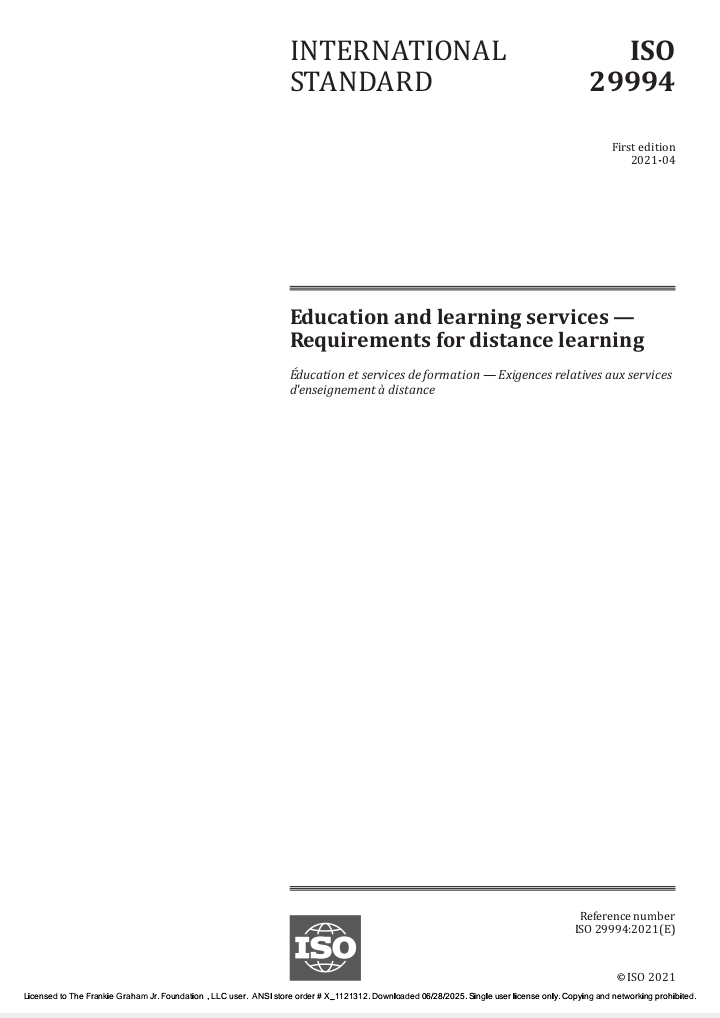
ISO 21001:2025: Educational organizations — Management Systems for Educational Organizations — Requirements with guidance for use
ISO 21001:2025 is an international standard that outlines requirements for a management system specifically tailored for educational organizations. It aims to improve educational processes, ensure learner satisfaction, and enhance institutional effectiveness. The standard provides a structured framework for consistent quality, stakeholder engagement, and continual improvement across all types of educational providers.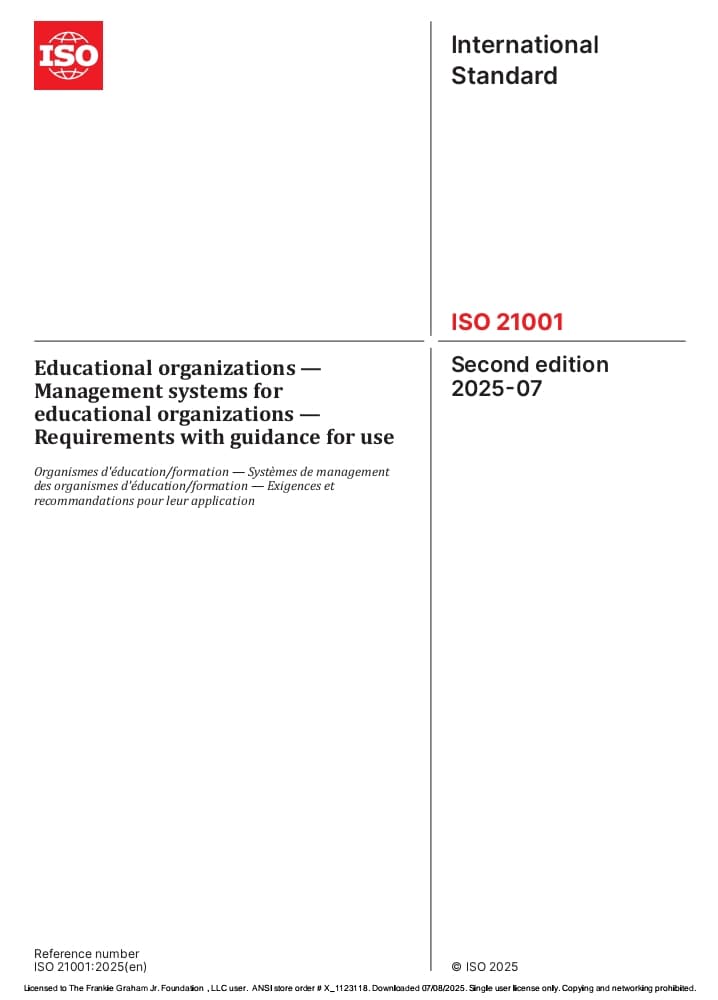
ISO/IEC 27002:2022 — Information Security, Cybersecurity and Privacy Protection — Information Security Controls
ISO/IEC 27002:2022 provides a structured set of information security controls designed to support risk treatment within an Information Security Management System (ISMS). Aligned with ISO/IEC 27001, it guides organizations of all sizes in implementing, maintaining, and customizing controls across organizational, people, physical, and technological areas, based on recognized global best practices and specific risk environments.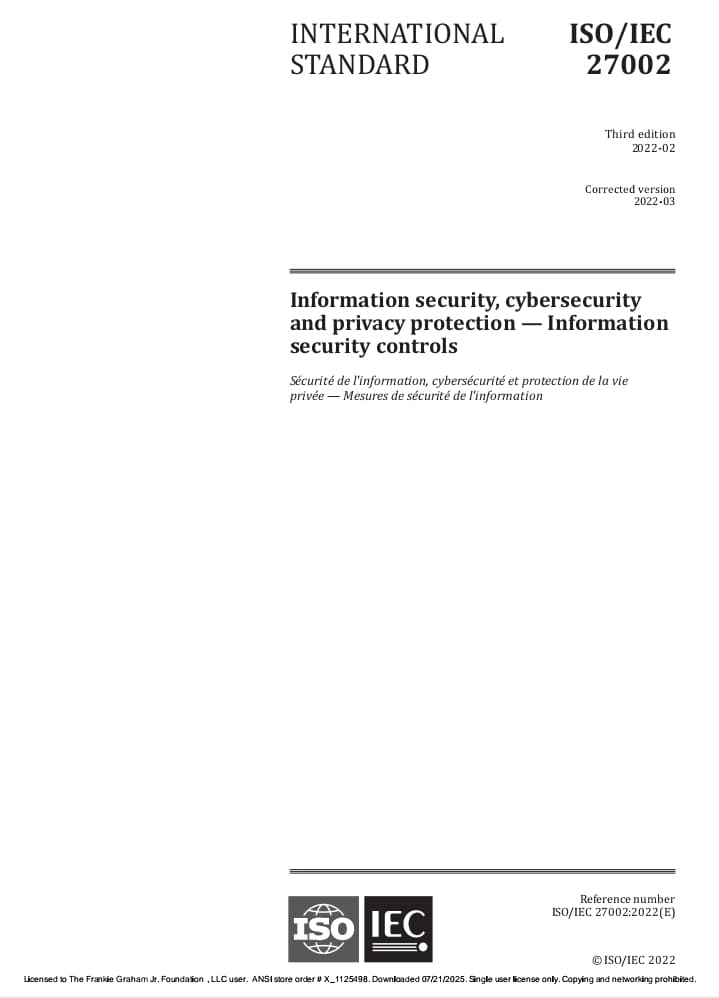
ISO/IEC 27701:2019 — Security Techniques — Extension to ISO/IEC 27001 and ISO/IEC 27002 for Privacy Information Management — Requirements and Guidelines
ISO/IEC 27701:2019 extends ISO/IEC 27001 and ISO/IEC 27002 by providing guidelines for establishing, implementing, maintaining, and continually improving a Privacy Information Management System (PIMS). It helps organizations manage personal data, demonstrate compliance with privacy regulations like GDPR, and build trust with stakeholders. This standard is applicable to data controllers and processors across all sectors, enhancing overall data protection and privacy governance.